Search This Blog

Translate

Thursday, December 13, 2012

Goodbyes Are Hard: My Last Family Tree Firsts Post

Goodbyes are always hard, but I knew that I only had one year as a newbie genealogist with Family Tree.  Well, as of today, my journey with them as the Family Tree Firsts Blogger has come to an end.  You can read my final post here.

It has been an amazing year, as I am sure you all are aware.  If you aren’t acquainted with the posts, well, go back and read them.  I’ll wait.  Seriously, they were cool, you’ll enjoy them.  Best of all, you can see how I evolved as timid newbie to what you have today: a slightly less timid, but still fresh faced and new, genealogist.

However, with endings come beginnings and I am anxious to see what doors open to me in the future.  I am excited and energized more than ever with thought of what lies in front of me.  Research has always been my passion and I want to start doing more of that with original records and in the places my ancestors lived.  Writing has become a near obsession and I want to write on more topics than my family.  There are stories to tell and information to share.

I hope that you will stick around and see what else I discover and get up to.  The ride isn’t over yet, in fact, I think it is just revving up.

Tuesday, December 11, 2012

The puzzle of Maria Meier Heinritz Jahnke

Image from the Library of Congress

I have struggled for over a year to trace my husband’s paternal line.  There are so many George Bennetts in New York City at the turn of the 20th Century.  Let me rephrase that… there are so many Bennetts, from Ireland, in New York City at the turn of the 20th Century.  My goal, from the beginning, was to track his family, and the maternal lines, back to the immigrant families.  Maybe, just maybe, I would get lucky and find out where the families came from too.  You can read past posts under Bennett, Jahnke, and Taylor for these family lines.

Recently I wrote about one of these maternal lines from the Bennett family, Jahnke.  You can read the post here.  I am sure you can see why the puzzle was not coming together and was frustrating to say the least.  I ordered the marriage certificates that I spoke of in the previous post and fortunately all but one have come in. 

First I looked at the marriage certificate and handwritten entry to the books for Emil and Maria Jahnke.  The certificate gave me a lot of information, including the fact that Maria was a widow (and she switches between Maria and Mary) and older than Emil.  The information from the return of marriage is listed below:
 
1.       Full name of Groom        Emil Herman George Jaks [he signed it Emil Jahnke]
2.    Place of Residence          142-143 Str. 8th Av. City
3.    Age at next Birthday       26 years Oct 11th last
4.    white
5.    Occupation         carpenter
6.    Place of Birth     Stessin, Pommerane
7.    Father’s Name  Ferdinand Jahnke
8.    Mother’s Maiden Name                               Louise Engelman
9.    No. of Groom’s Marriage             1st
10.  Full Name of Bride           Maria Heinritz
        Maiden Name if a widow             Meyer
11.  Place of Residence          142-143 Str. 8th Av. City
12.  Age next Birthday            31 years May 11th last
13. white
14.  Place of Birth     Munster, Westphalia
15.  Father’s Name  Unknown
16. Mother’s Name Unknown
17. No. of Bride’s Marriage  2d
 
New York May 12th 1884
Certificate of Marriage
State of New York

I hereby certify that Emil Herman Jeorge Jahnke and Widow Maria Heinritz were joined in marriage by me, in accordance with the laws of the State of New York, in the City of New York, this twelfth day of May A.D. 1884.
Dr. E.F. Moldehnke
Pastor St. Peter’s Germ. Lutheran Ch. [Maybe this one?]
124 E. 46th Str. City

Witnesses:
Mrs. Margar. Sommer
Mr. George B. Jahnke

I was thrilled with the luck.  My husband’s 2nd great-grandmother was born in NYC in 1872.  According to this marriage certificate Emil was not her father.  She was most likely born Augusta Heinritz during her mother’s first marriage.  I know her younger sister Mary was born in 1887 and therefore a daughter of this 2nd union.

Plus, I now had the place where Maria Meyer was from in addition to the church they attended.  The church records are on FamilySearch too.  Unfortunately they are not indexed, but I can browse the images.  Perhaps I will find another marriage, birth, baptism, or death record for these families there.

Using Ancestry and FamilySearch I went about filling in the gaps and holes of these people’s lives.  First I looked for a marriage certificate for Maria and her first husband.  I located it in the database New York City Marriages 1600-1800s at Ancestry.  I will need to order the certificate to see what else I can find written on it, but for now I know that Augustus Heinritz and Maria Meier were married in 1871 at Manhattan.
 
Using this information I went looking for them on the 1880 US Federal Census.  Up until now I had no luck finding Augusta.  Now I know I was looking for the wrong last name.  It took me several hours of trial and error before I found them.  In 1880 A. Hennritz, his wife Mary and 2 daughters, Gussie age 8 and Hattie age 6, were living in Flushing, Queens.  This was the first time I had seen the name Hattie.  Now I wonder where she went, and what happened to her.


Since I had 2 daughters to work with, as well as ages, and parents’ names I set off locating birth records.   Thankfully once I had that information it was relatively easy to find what I was looking for.  Auguste Heinritz was born 18 March 1872 and Henrietta Heinretz was born 22 July 1873 both in Manhattan.  These certificates are now on my to-be-ordered list.

Pressing my luck a little further I went looking for Augustus and Maria on the 1870 census.  She should have been about 17/18 and he should have been about 34.  Believe it or not, I have a potential hit in the 1870 Census for Maria living in Manhattan.  She may have been living in the 7th election district of the 10th ward, New York City, on Christie Street between Grand and Hester.  Unfortunately the Census taker only listed her name (Mary Meier), her age (17), that she was female, and from Germany.  The way the listing is made I also can’t tell if she is living with anyone.  It states she and 29 other people live at the 90th dwelling visited.  Most are from various Germanic places, but none have the same last name as her.  It would be possible that she was related to one or more of these families, but I have no way to tell at this point. 

The last piece I uncovered was the listing for Emil and Mary on the 1892 New York State Census.  In my head they should be living with at least 3 daughters: Augusta, Henrietta, and Mary.  However, they are not living with any of the children.  They are listed alone, two pages in front of his parents, and his brother’s family on Long Island.  Where did they go?  Augusta would have been 20, Henrietta 18, and Mary 8.  Currently I am looking to see if they are living somewhere together because I don’t know of any other family to search for.


Off to order more certificates and work this puzzle out.  Next I need to figure out James Bennett and Isabella Rudy, Augusta’s in-laws.

Sunday, December 9, 2012

Heraldry Part 3

In this third part of my series on heraldry I will start defining animal positions.   This topic is split up into 2 posts due to the volume of information and graphics presented.  Over the next two posts I will discuss the most common positions of animals as well as the positions that occur in only certain fauna.  The following is by no means a complete listing of all the positions, or heraldic postures, an animal could have.  By this point I am sure you have realized that heraldry can be very complicated and in-depth.

Heraldic fauna fall into 6 classifications: beasts, birds, fish, insects, monsters, and reptiles.  In early heraldry there were very few animals used, mainly the lion, but over the years the selection grew to several dozen animals that were popular to use.  The tables below show the different postures you may find when looking at arms. 

Four Legged Animals, Beasts, or Monsters
Four legged creatures are some of the more common charges found.  Examples of these are: bear, dog, dragon, lion, stag, and tiger.

 
Posture
Definition
Example
Rampant (rearing)
Body erect, forelegs apart and out, back rear leg off ground
Salient (leaping)
Body erect and elongated, forelegs out and together, rear legs together on ground
Courant (running)
Body elongated, head erect, all four legs extended
Passant (walking)
Body horizontal, head angled or erect, three feet touching ground with right foreleg raised
Statant (standing)
Body horizontal, head angled or erect, all four feet touching the ground
Sejant (sitting)
Body angled, head erect, all four legs touching the ground, rear legs tucked, front legs straight
Sejant Erect (sitting upright)
Body and head erect, rear legs tucked, forelegs apart and out
Couchant (lying down)
Body horizontal, head erect with legs tucked under body
Dormant (sleeping)
Body horizontal, legs tucked under body, and head down in a sleeping position
There are also two head potions that are common with four legged animals or beasts: gardnat and regardant.  If the beast is looking at you, the viewer, he is known as being gardant.  On the other hand regardant refers to the beast looking backwards over their shoulder.


Birds or Avians
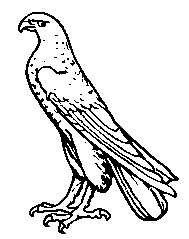
There are three divisions of avians within this category: raptors, general birds, and special birds.  The three most common raptors are the eagle, falcon, and owl. Each have a position that is commonly associated with them:  displayed for the eagle, rising and close for the falcon, and close guardant for the owl.  In the general bird group you will find commonly the crow, duck, and martlet.  The default position for these birds is close.  Special birds have positions that are unique to them and no other birds.  These would pride for the peacock, vigilance for the crane, and piety for the pelican.

Birds have wing positions like beasts have head positions.  They can be used by themselves or combined when explaining the position of the bird’s wings.  I listed the wing positions first because they can be used to define the body posture of the bird as well.


Posture
Definition
Example
Addorsed
Both wings on same side of body
Displayed
Wings on either side of body
Elevated
Wingtips away from body
Inverted
Wingtips tucked back towards body
Displayed
Wings and legs splayed
Close
Wings close against the body and feet on the ground
Volant
Feet invisible, wings outstretched, wings may or may not be displayed
Rising
Feet on ground, wings elevated or displayed, addorsed or not
Close affront (close guardant)
Normally only for owls also known as close guardant
Pride
Seen only with Peacocks, close affront with tail feathers displayed
Vigilance
Seen only in cranes, close with one leg raised, stone in claw
Piety (or vulning)
Seen only in pelicans, normally with nest and chicks

In the next post I will go through fish, insects, and reptiles.  These are very interesting because there are specific terms associated with each that are not used to describe other animals.


Heraldic Clipart from “Free Heraldry Clipart Site”

Friday, December 7, 2012

Next FTF post is up: Slavery in the family

A wheat field in Virginia, taken by
photographer Dorothea Lange in
1936. Courtesy of the Library of Congress
Prints & Photographs Online Catalog.
My latest post from Family Tree Firsts is up, and you can read it here.

As I stated in the opening paragraph, when you are researching Virginia Colonial roots, there is a good chance you are going to come across slave listings.  I don’t have anything new to say, but I do want to share with you names on it.  Perhaps, someone out there can use this information in their research.

However, there is a term I don’t understand, and if you do, please let me know.  What does “Salve Vix” mean?  It is the heading for the listing of those James owned, and I have not had a lot of luck finding the definition of it.  I have found several references to “vix” in newspapers of the day, but nothing that would lead me to understanding the term.

The full inventory can be found at the Library of Virginia on microfilm reel 1 of the Powhatan County Deeds.  (Part of the index to Powhatan County Wills and Administrations (1777-1800), pages 375-377, Inv. & appr. rec. 20 Sept. 1797; Drake, James; Deed Book No. 2, 1792-1800 (reel 1))
 

Agreeable to an order of Powhatan Court which is hereunto assured we whose names are subscribed below being first sworn did appraise such of the estate of James Drake deceased as was shown to us Sept. 20th 1797


Slaves Vix
£
S
D
 
Shadrach
a man
100
~
~
Morocco
Do
100
~
~
George
Do
100
~
~
Stephen
a Lad
90
~
~
Charles
Do
95
~
~
Margaret
a Child
20
~
~
Pheba
a Woman
50
~
~
Charlotte
Do
50
~
~
Phillis
Do
90
~
~
Maria
a Girl
30
~
~
Harry
a Man
70
~
~
Pat
a Woman Slave
50
~
~


Thursday, December 6, 2012

Charms of the past

When I was little I loved playing in my maternal grandmother’s clothes and jewelry.  She had the most amazing things that glittered, shined, sparkled, and were full of color.  Mom was an Army brat and they traveled all over the US and Europe.  Grandma had dresses that she bought in Paris, jewelry from Rome, and memories that made my little head spin.  While the dresses hung off of me, the shoes were way too big, and the gloves slipped off my hands I always felt so glamorous playing dress up in her attic.

My grandmother died when I was in high school and she left me, as her only granddaughter, her jewelry.  At that time I couldn’t see past the plastic and old battered remnants of days gone by.  There were a few good pieces that struck me as awesome, but the rest was, well, old.  It took me a few months (okay years) to appreciate what I had because at 16, you really are dumb.

A few months after she died I went to my boyfriends (now husband) senior prom wearing a necklace, earrings, and bracelet set of 1950’s vintage rhinestone jewelry that she left me.  This all before the vintage rage took off too.  I felt quite the trend setter and fabulous in my rhinestones.  Over the years I have set down again and again with my grandmother’s jewelry boxes going through all the pieces.  She has several items that my grandfather bought her when he was stationed in various places.  Service pins from the Boy Scouts, American Red Cross, and her Eastern Star ring.  Presents from friends long gone with hand written notes to her thanking her for being a friend, plus so many more things including my most treasured item, her charm bracelet.
Grandma's charms
She told me she started her charm bracelet when she graduated from high school.  That would have been 1936.  The charm commemorating that is a diploma.  There are charms for her wedding next.  After that she added a charm for every duty assignment and trip they took as a family until my grandfather retired from the Army and they moved back home to Indiana.  The charms are on every link of the bracelet and to say it is overflowing with memories would be an understatement. 

I don’t know all the stories, my mom and uncles have told me a few, but these little pieces of silver have always intrigued me.  When I would miss her in the months and years following her death I would pull out this charm bracelet and think about her wearing it and collecting all the bits.  Shortly after I was married I started my own bracelet.  I have not been as dedicated to collecting charms as my grandmother was (can you believe that there are places that don’t sell charms?) but I try to collect ones when we take family trips that have a special meaning.  Also on it are 2 charms from my wedding cake, one for each of my babies, and one given to me when I became a mom.


Best off all I discovered recently that my grandmother and I share a charm. I can’t believe I didn’t realize it before. We both have liberty bells from Philadelphia on our bracelets.  Now I am taking a closer look at it again to see what other adventures I have shared with my grandmother. 


*Image from unknown source


Tuesday, December 4, 2012

Week 49 of Abundant Genealogy

Week 49: Research Location. Which genealogy research location or city brings a smile to your face? What makes this place special to you? What family history treasures does it hold for you? Why should others visit this place?

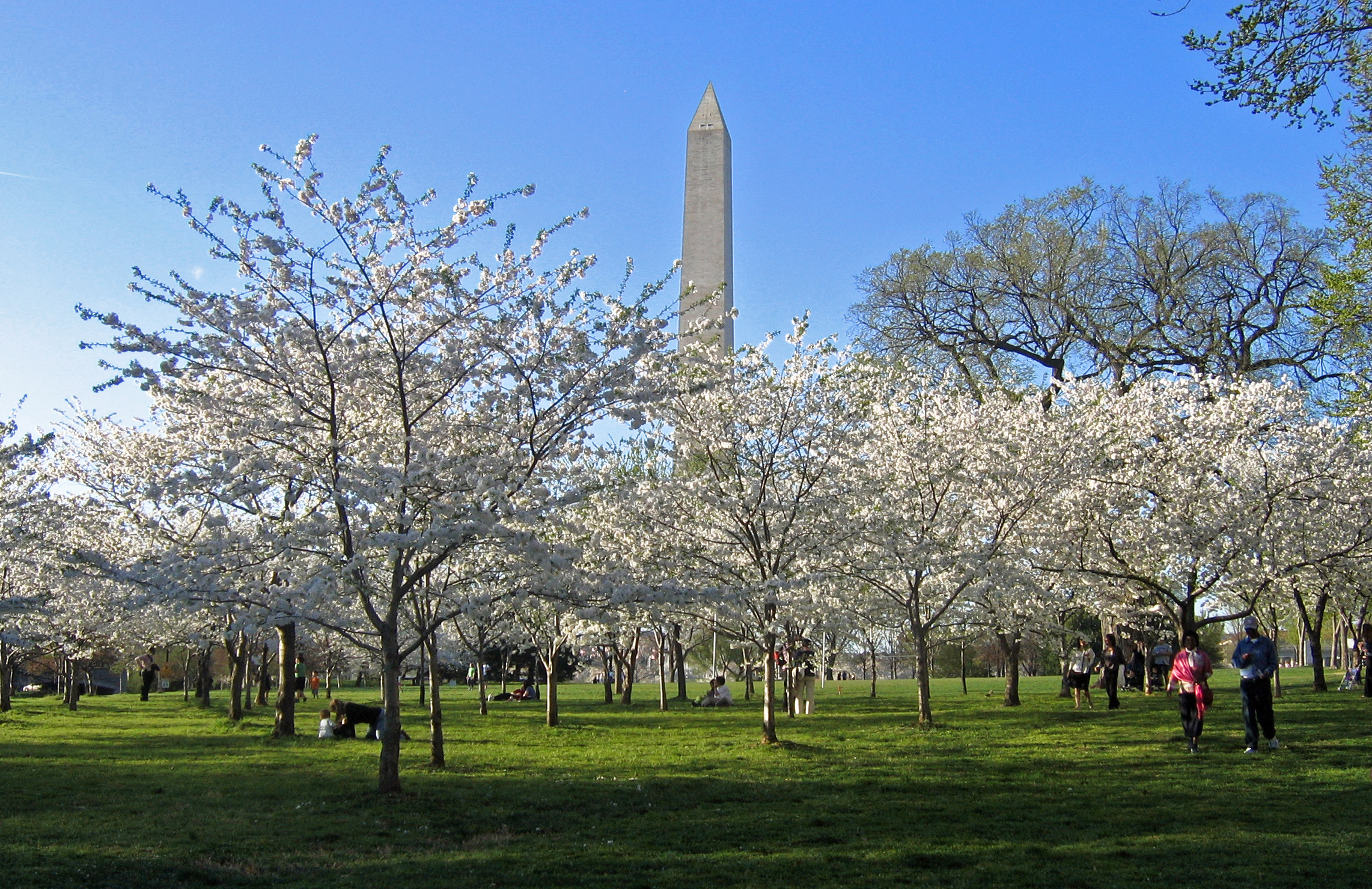
File:Cherry Blossoms and Washington Monument.jpgHands down, so far, my favorite place to research is Washington, D.C.  Yes, I know, I don’t live that far from it, but there are so many places to have a genealogical adventure there.  You could go to The National Archives, Library of Congress, DAR Library, NGS, plus many other places of interest to genealogists and historians.  If you have never had an opportunity to visit or research at these places you should make the time.

I never knew what family treasurers NARA held for me until I saw the pension files I requested last spring.  Among my family discoveries were War of 1812 discharge papers, letters written home from the Civil War, a picture, and amazing genealogical information.  It was the most amazing experience.

Next up I have plans to visit the other places on the list above.  Just have to carve out the time and find a sitter...

*Image from Wikimedia Commons